Advent People: Journey to the Manger

Last year, our church focused on the gathering at the manger during our children’s time during Advent. This year, Advent begins in three weeks, so I’m sharing what we did now so that if you are interested in engaging these ideas in your own children’s time or home worship, you have time to prepare.

For each of the four Sunday of Advent, we focused on a different people at a different moment of the story: the Mary’s response to the angel Gabriel, Mary and Joseph’s journey to Bethlehem, the shepherds seeing the star, and the birth of the infant Jesus. We kept our focus on our theme through Epiphany, bringing in the magi, and we returned to it for Candlemas. Thus, our manger scene remained in our sanctuary for four Sundays of advent and for several weeks after. If you are following along at home or in your church, this year that would be November 29 to January 31 (the last Sunday before Candlemas).

Our children’s time is offered by volunteers in the congregation. Each week, children from infants to about age 12 come forward to the front of the sanctuary for a time dedicated to them. Volunteers may tell stories, do brief activities, read books, introduce material culture related to the scripture reading of the day, etc.

During our Advent activities, we used a creche of fève figures. These very small (about the size of a thimble) porcelain figurines were hidden in the sanctuary each week, and the children were tasked with finding them after the service; if they did so, they were free to share where they found them with other children. After they reported the location back to the adult leading children’s time, they were rewarded with a small figurine of the focus of that day’s story. These were created by painting different figures (an angel, Mary, Joseph, and baby Jesus) on small stones sealed with Modge Podge. It took me about 2 hours to paint 30 4-figure sets.

Collection de Bethléem Nativity 10 figurines image 0

The nativity set we used. Consider using one you already own or supporting local artists in purchasing one or purchasing a fairly traded one at Ten Thousand Villages.

Over the next weeks, I’ll share more about each lesson, but if you are interested and want to get started, here is what you need:

  • 4 small stones x the number of children in your congregation + more for visitors and some for adults who may want a set (Several in my congregation did)
  • acrylic paint and brushes to create characters: I recommend very small brushes and white, medium brown, dark brown, black, blue, green, gold, and red. Use the medium brown + no white or various amounts of white to create varied skin tones, as meets your congregation’s needs. Use dark brown and black for hair.
  • Modge-Podge or other sealer
  • a fève set, an additional set of painted stones for your use in the church, or another tiny nativity
  • a star
  • a manger, if desired


Happy Halloween!

When did I become a person with a Halloween door hanger? This year, apparently.

This year, we “booed” some of our favorite local teachers. They got an after-dark present on their doorsteps. The witches at top are made from milk jugs painted green with faces drawn on them, topped with witches’ hats. Inside was candy and a bottle of wine. The mummies are toilet paper-wrapped bottles of wine with googly eyes (which we try to keep on hand by the gross). It was so fun to say “thank you” to teachers for their work this year this way!

Listening Hearts:

Our family has been working on a new daily practice: listening. Active, reflective, engaged listening that says to the other person. My desire is to understand you as you are, not to correct you or improve you or educate you.

To that end, we’ve been writing questions to help us get to know each other better. Some of these questions are serious; many are silly. Sometimes we laugh at things that are meant to be serious, and sometimes our silliness leads us into serious places. Our goal is to publish one each day on our blog. We hope you find them useful, either as prompts to think about yourself or as questions you bring to the car ride or the dinner table. They’re written by all of us, and you’ll see the diversity of our thoughts and interest in them, so in the questions themselves, you’ll get to know us a little better too.

Subscribe to our blog (or follow our Twitter account @familyfoxhole) to have them appear in your inbox or Twitter feed daily.

Today’s question:

What is one happy memory you made this month?

Listening Hearts: Day

Our family has been working on a new daily practice: listening. Active, reflective, engaged listening that says to the other person. My desire is to understand you as you are, not to correct you or improve you or educate you.

To that end, we’ve been writing questions to help us get to know each other better. Some of these questions are serious; many are silly. Sometimes we laugh at things that are meant to be serious, and sometimes our silliness leads us into serious places. Our goal is to publish one each day on our blog. We hope you find them useful, either as prompts to think about yourself or as questions you bring to the car ride or the dinner table. They’re written by all of us, and you’ll see the diversity of our thoughts and interest in them, so in the questions themselves, you’ll get to know us a little better too.

Subscribe to our blog (or follow our Twitter account @familyfoxhole) to have them appear in your inbox or Twitter feed daily.

Today’s question:

Who is your favorite hero of fiction?

Image result for atticus finch"

Listening Hearts

Our family has been working on a new daily practice: listening. Active, reflective, engaged listening that says to the other person. My desire is to understand you as you are, not to correct you or improve you or educate you.

To that end, we’ve been writing questions to help us get to know each other better. Some of these questions are serious; many are silly. Sometimes we laugh at things that are meant to be serious, and sometimes our silliness leads us into serious places. Our goal is to publish one each day on our blog. We hope you find them useful, either as prompts to think about yourself or as questions you bring to the car ride or the dinner table. They’re written by all of us, and you’ll see the diversity of our thoughts and interest in them, so in the questions themselves, you’ll get to know us a little better too.

Subscribe to our blog (or follow our Twitter account @familyfoxhole) to have them appear in your inbox or Twitter feed daily.

Today’s question:

What is one happy memory you made this month?

Party Tricks: Nelda Siebold’s Meatballs

When can we gather again together? I don’t know, which means that I’ve not gotten to make my favorite meatball recipe in a long time. It’s hard to justify making 3 lbs of meatballs when I’m only cooking for four people. I could scale this down, but it freezes well and reheats nicely, so it’s a good choice for cooking on a weekend and eating now and later.

The recipe is based on Patti Clark’s contribution to the Clay Center, Kansas Evangelical Covenant church cookbook from 1999. It’s in honor of her mother, Nelda Siebold. I know neither of these women, and the cookbook was a gift to me from a former church member. The recipe is titled “Mom’s Barbeque Meatballs,” but since Nelda isn’t my mother, I call them “Nelda Siebold’s Meatballs.” I don’t know Nelda Siebold or anyone related to her, but I thank God for her meatballs about a dozen times a year.

This recipe makes a significant number of meatballs–a 9×13 pan and another 9×9 pan. So they’re good for a potluck or a party. If you use certified gluten-free oats and make sure that your onion powder and liquid smoke are gluten-free, you can make a gluten-free main dish that your friends who avoid gluten will appreciate.

a casserole pan of meatballs.

Ingredients

for meatballs

  • 3 lbs hamburger
  • 2 1/4 c. oatmeal
  • 3/4 c. milk
  • 2 1/4 tsp. liquid smoke
  • 1/2 tsp. garlic powder
  • 2 1/2 tsp. salt
  • 1/2 tsp. pepper
  • 2 1/4 tsp. chili powder

for sauce

  • 2 2/3 c. ketchup
  • 1  1/3 c. brown sugar
  • 3 tsp. liquid smoke
  • 1/2 tsp. garlic powder
  • 1/2 c. chopped onion (or, really, a whole onion, chopped any size you like, of any size)

Directions:

Briefly mix meatball ingredients until combined. Shape into walnut-sized balls and place into a 9×13 pan and a 9×9 pan. They should be crowded in the pan, each meatball lightly touching the ones around it.

Bake at 350 F for 10 minutes.

Add sauce and bake for 60 additional minutes.

We tend to eat these with egg noodles and Brussel sprouts.


Beets Every Which Way: Beet Salad

red beets tossed in parsley

I love pickled beets so much that I rarely prepare them any other way. That just means that when I do eat them in another preparation, it’s gotta be excellent.

Like this little salad.

Ingredients:

  • 2 c. cooked beets, peeled, and shredded or quartered
  • 1-2 bunches of fresh parsley
  • 3 Tbs oil oil
  • 2 Tbs fresh lemon juice
  • 1 tsp sugar (optional)
  • 1/2 tsp salt

Whisk together olive oil, lemon juice, sugar, and salt. Dress parsley with dressing. Gently fold in beets. Season with cracked pepper if you like.


Beets Every Which Way: Simply in Season(ish)

a glass quart jar of purple beets

I have a beet problem, which is to say that I love pickled beets, which means I’m worried that I’m missing out on the perfect pickled beet recipe. That means I experiment a lot with them. My rule has been that when I make them, I make my current favorite recipe alongside a new recipe, so I can taste them against each other. Sometimes the new recipe goes on repeat and sometimes it just goes into my notes, to be revived if I think a friend or guest will enjoy it.

Today’s recipe is a riff on the Simply in Season recipe, which you know is part of the Lancaster County Mennonite tradition because of the unholy amount of sugar in it. It’s reduced here.

Ingredients

  • 1/2 gallon boiled beets, sliced or quartered*, liquid reserved
  • 1 1/2 c. liquid from boiling the beets
  • 1 1/2 c. white vinegar
  • 1 c. brown sugar
  • 1/2 stick cinammon
  • 4 cloves
  • 1 tsp salt

Boil vinegar, water, and spices, then cool slightly; strain. Pour over beets in a heat-proof jar. Refrigerate.

*You can steam them by covering them in tin foil and placing in a roasting pan at 400 degrees. Roast by putting them in a roasting pan with olive oil at 400 degrees. Or place beets in enough water to cover and boil 1-2 hours until soft. In any case, wash thoroughly but do not peel before you begin and leave 1-2 inches of tops intact. After the beets are cooked, the skins slip right off.


Beets Every Which Way: Red Wine Vinegar Beets

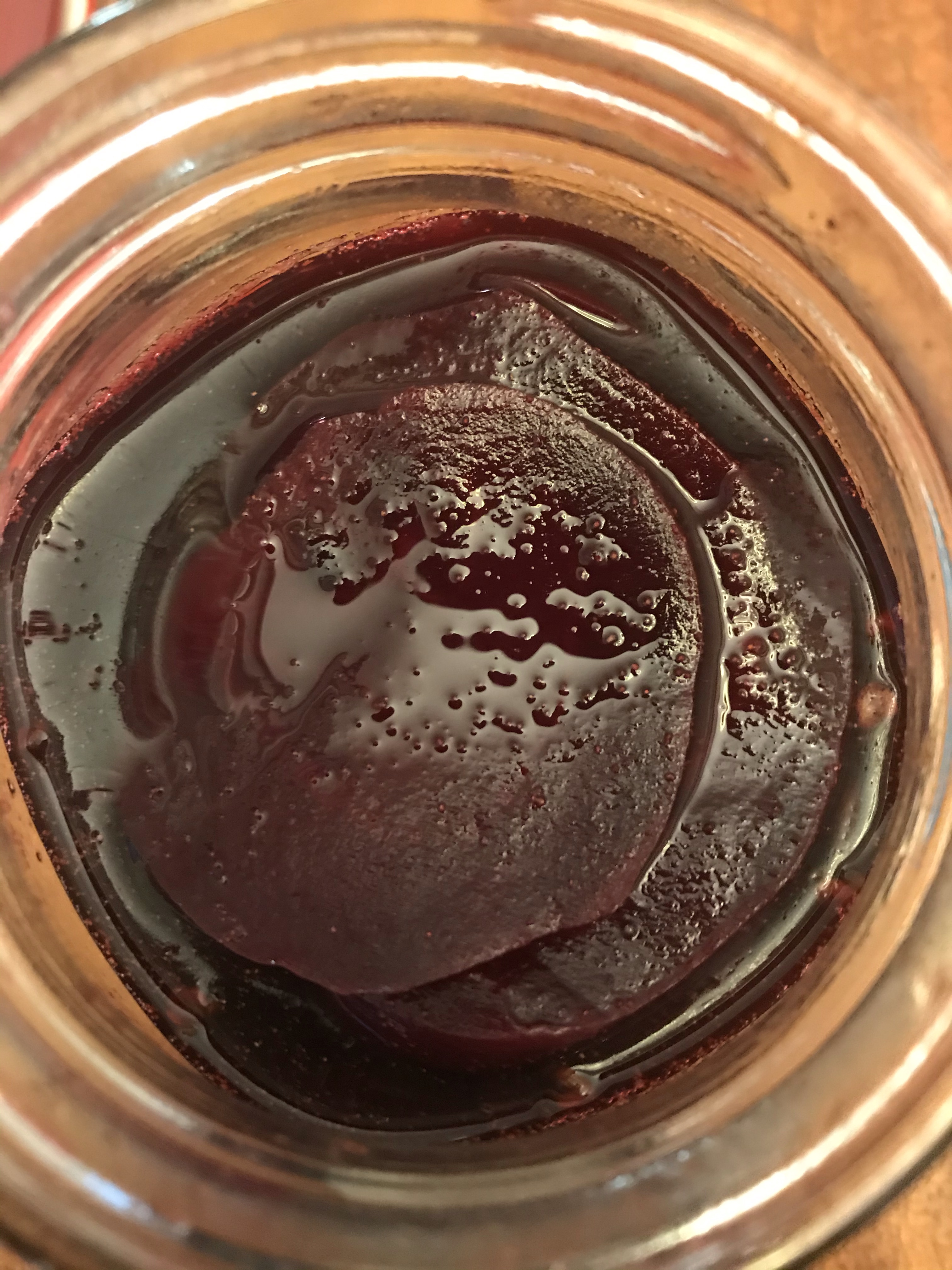
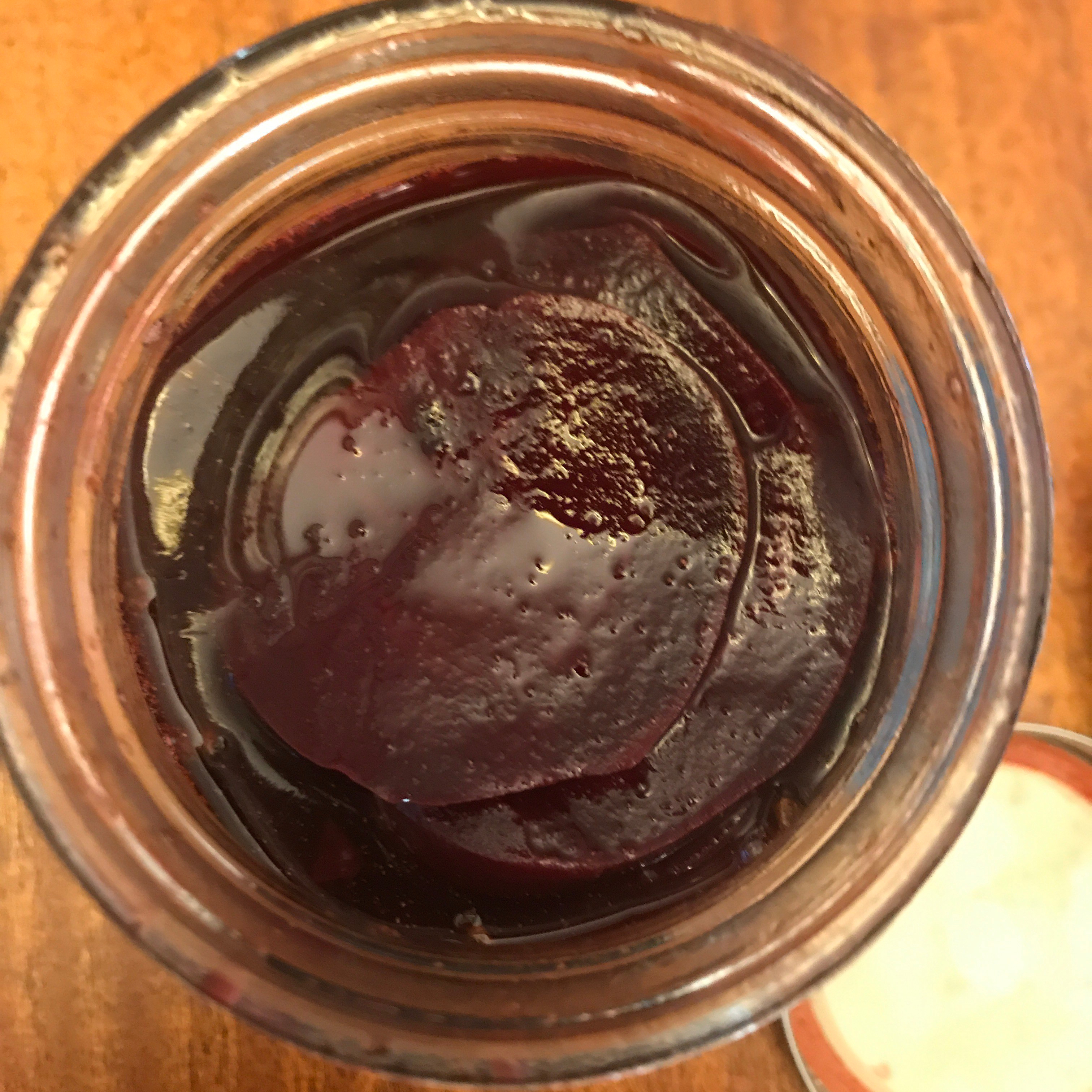
picked beets from a bird's eye view

I have a beet problem, which is to say that I love pickled beets, which means I’m worried that I’m missing out on the perfect pickled beet recipe. That means I experiment a lot with them. My rule has been that when I make them, I make my current favorite recipe alongside a new recipe, so I can taste them against each other. Sometimes the new recipe goes on repeat and sometimes it just goes into my notes, to be revived if I think a friend or guest will enjoy it.

Today’s recipe is a riff on red wine beets, which are delicious but not common in our house because I don’t usually keep red wine around.

Ingredients

  • 1 lb beets steamed, roasted, or boiled beets, sliced or quartered*, liquid reserved if boiled
  • 1 1/2 c. red wine vinegar
  • 1/2 c. liquid from boiling beets or nonchlorinated water
  • 1/3 c. light brown sugar
  • 2 tsp whole allspice, cracked
  • 1 inch of fresh ginger
  • 4 whole cloves
  • 5-10 black peppercorns
  • half stick of cinnamon
  • 1 tsp kosher salt

Boil vinegar, water, and spices, then cool slightly; strain. Pour over beets in a heat-proof jar. Refrigerate*

You can steam them by covering them in tin foil and placing in a roasting pan at 400 degrees. Roast by putting them in a roasting pan with olive oil at 400 degrees. Or place beets in enough water to cover and boil 1-2 hours until soft. In any case, wash thoroughly but do not peel before you begin and leave 1-2 inches of tops intact. After the beets are cooked, the skins slip right off.


Beets Every Which Way: Pickling Spice Blend

a jar of pickled beet from a bird's eye view

I have a beet problem, which is to say that I love pickled beets, which means I’m worried that I’m missing out on the perfect pickled beet recipe. That means I experiment a lot with them. My rule has been that when I make them, I make my current favorite recipe alongside a new recipe, so I can taste them against each other. Sometimes the new recipe goes on repeat and sometimes it just goes into my notes, to be revived if I think a friend or guest will enjoy it.

Today’s recipe is more of a traditional pickle profile.

Ingredients

  • 1 lb beets steamed, roasted, or boiled beets, sliced or quartered*
  • 1/2 medium onion, sliced thin\
  • 1 c. apple cider vinegar
  • 1/2 c. nonchlorinated water
  • 1/2 c. sugar
  • 1/4 tsp mustard seeds
  • 1/4 tsp whole coriander seeds
  • 1/4 tsp whole allspice berries
  • 1/2 tsp celery seeds
  • 2 bay leaves
  • 3/4 tsp. whole peppercorns

Boil vinegar, water, and spices, then cool slightly; strain. Pour over beets and onions in a heat-proof jar. Refrigerate*

You can steam them by covering them in tin foil and placing in a roasting pan at 400 degrees. Roast by putting them in a roasting pan with olive oil at 400 degrees. Or place beets in enough water to cover and boil 1-2 hours until soft. In any case, wash thoroughly but do not peel before you begin and leave 1-2 inches of tops intact. After the beets are cooked, the skins slip right off.