Advent People: We Give Our Gifts

This year, I’m sharing a bit about an Advent activity my church did last Advent during our time dedicated to children. Each Sunday of Advent, we introduced one or more figures to our Christmas story.  The figures were hidden in the church each week, moving closer and closer to the Bethlehem, the manger, and the star, and children were invited to search for them after church each week, sharing where they found them with other children so that everyone could find them. If they shared the location with the adult who led children’s time that Sunday, they received a small stone with one of that week’s figures painted on it as a prize, so that by the end of Advent, they had a Holy Family + Angel nativity scene.

The Sunday after Christmas (December 27 in 2020), we sing Christmas carols for the whole service. This week, our focus for children’s time was on gift giving.

Our children span from 2-12, and some are very familiar and some very unfamiliar with the Christmas story, so I aimed for 5-8 minutes of attentive time.

I brought with me four items: a pair of shoes, a Christmas stocking, a plate with cookies and carrots, and a shoebox with grass in it. Here is a rough transcript of what I shared:

In some parts of the world, December 6 is St. Nicholas Day. Others celebrate it on December 19th, and some people don’t celebrate it at all. Did anyone put shoes [showing my shoes] out for St. Nicholas at night and find that, in the morning, they had coins in them? [Children shared what they did for St. Nicholas day.]

[Showing a plate of cookies and carrots.] Did anyone put something like this out on Christmas Eve? We put out peppernuts. What kind of cookies did you put out for Santa? [Children’s sharing.] Did anyone put out something for Santa’s reindeer?

Did of you put out stockings on Christmas Eve? This stocking is special to me, because my mother made it for my daughter, as a gift to her for her first Christmas. Do you have special stockings? [Children share about their stockings.]

[Showing the shoe box of grass.] Next week is Epiphany, when many Christians celebrate when the magi or wise men visited Jesus. In our nativity sets, we often see three magi, but the Bible actually doesn’t tell us how many came. Has anyone here ever put out a gift for the magi? [No one did.] Look what is inside this box. [Show it to children and have one of them announce that it is filled with grass.] Right, it’s grass. We traditionally show the magi traveling by camel, so children in Puerto Rico, which is part of the US, often leave a box of grass for the camels, and they get little gifts in exchange on Epiphany, which is sometimes also called Three Kings Day.

These are all examples of how we give and receive gifts at Christmas. Maybe your family has other traditions, too. Christians around the world all have different customs.

Today at church, we are having a Christmas carol hymn sing. When we sign to God, we are giving God the gift of our voices and praise. Today, we are also saying “thank you” to God for the gifts God has given us. And we’re sharing our gifts with each other, too–like the gift of playing the piano or the trumpet! God loves it when we share our gifts with each other and share our time together to say praise God for the gifts we’ve received.

I then shared that this was our final day of searching for figures for the nativity. Next week, for Epiphany, the magi would join the other figures in our creche. But today, they were still hidden. And like the magi of the story, they were coming from the East (that is, hidden on the East side of the sanctuary). When the children found them and reported back on their location, they received a small prize (in this case, $1).

***Any time you speak to children or adults about gift giving, be sensitive. Invitations to share what they received as gifts may result in comparisons that make some children feel short-changed or others embarrassed. “Did you do X?” is gentler than “Did you get any presents?”, but even this should be asked only if you know the situation of children in your presence. Children in foster care or unstable family situations may not have strong traditions.



12 Days of Christmas Cookies: Sand Tarts

This Christmas, we’re sharing 12 Christmas cookie recipes to help you prepare for your cookie parade. And on this final day, I’m sharing with you my very favorite cookie recipe, for Sand Tarts. (Despite the name, they are not tarts at all. And they have nothing to do with sand, either.)

As a native of Lancaster, Pennsylvania, I didn’t realize that these were a regional cookie, and now I’m on a mission to bring them to other parts of the world. They’re a perfect Christmas cookie if you like using cookie cutters and frosting and decorating your cookies, but, to me, they are best served plain, ideally straight from the oven. In that moment, they are still a little soft and incredibly buttery. A few minutes later, they become crispy and are also delicious–no frosting or sanding sugar or cinnamon imperials needed.

You have to refrigerate the dough overnight before you cook these, so plan accordingly. These have a lot of butter, which has to stay cool for you to work with it.

Ingredients

  • 3 eggs
  • 1/2 lb (2 sticks) of butter
  • 2 c. sugar
  • 1 tsp salt
  • 1 tsp vanilla
  • 3 c. flour
  • additional egg white + 1 tsp water
  • Optional: shelled pecans, for decoration; cinnamon-sugar blend for decoration

Directions

  1. Beat butter until creamy. Add sugar and beat until fluffy. Beat in eggs eggs.
  2. Add salt and vanilla.
  3. Add flour, about 1/2 c. at a time.
  4. Divide into 4 balls. Wrap each in plastic wrap and refrigerator overnight.

Baking Directions:

  1. Heat oven to 350 degrees.
  2. Remove one ball of dough from refrigerator. Lightly flour a work surface and rolling pin. Roll out dough very thin–1/8 of an inch as any more will result in a chewy, not crisp, cookie. Avoid re-rolling dough as this toughens the cookie.
  3. Place on an ungreased cookie sheet. Brush with a mixture of an egg white whisked with 1 TBS water or just an egg white; this will produce a glossy sheen. Sprinkle with cinnamon sugar and place a pecan neatly in the center of the cookie. (Alternatively, you can frost and decorate after baking. Or, best of all, leave plain.)
  4. Bake 7-10 minutes, beginning to check through the oven door at about 6 minutes. These cookies are unleavened and so will not rise much, nor do they brown very much on the edge. If needed, remove cookie sheet from the oven to quickly check the underside: if cookie is browned, they are done.
  5. Remove from oven and allow to cool briefly on sheet before moving to a wire rack.
  6. Avoid placing recently cut-out cookies on a hot baking sheet as this will cause the butter to heat too quickly before baking. Instead, rotate pans so that only room temperature pans are being placed in oven.

Advent People: Baby Jesus

This year, I’m sharing a bit about an Advent activity my church did last Advent during our time dedicated to children. Each Sunday of Advent, we introduced a few new characters from the Christmas story, all of them tiny porcelain figurines. The figures were hidden in the church each week, moving closer and closer to the Bethlehem , the manger, and the star, and children were invited to search for them after church each week, sharing where they found them with other children so that everyone could find them. If they shared the location with the adult who led children’s time that Sunday, they received a small stone with one of that week’s figures painted on it as a prize, so that by the end of Advent, they had a Holy Family + Angel nativity scene.

The first week of Advent, we explained what the next few weeks would entail, and we reviewed it for just a few moments at the start or end of each of the following weeks’ children’s time so that new children would be included. Each week, the leader showed the children the new figures being added to the scene, then hid them during the bustle of children’s dismissal. The fourth week (December 20 in 2020), we focused on the baby Jesus, placing him with the other figures under the star, which we had hidden at the front of the sanctuary.

Our children span from 2-12, and some are very familiar and some very unfamiliar with the Christmas story, so I aim for about 5-8 minutes of total time with them.

This week, our focus was on babies. I shared the story this way:

This week, Christians around the world celebrate the birth of Jesus. There is a lot we don’t know about Jesus’ birth, but there are some things the Bible tells us: His parents had been told by God that he was special, and they were excited for his birth. His name was already chosen by God and symbolized his role in our world: to save people and to be with us. We know that when Mary and Joseph arrived at Bethlehem, they couldn’t stay with Joseph’s family, probably because so many relatives were already in town. There wasn’t even room for them to stay at a hotel, so they had to sleep with the animals. Some people think it was a barn, but others think it was a cave where the pack animals that people had ridden into the city were kept.

Even so, it was special that Jesus was born. Have you ever held a baby animal or a baby person? (Ask children about their experiences with babies.) What makes baby animals and people so adorable? Why do we love them? (Solicit their ideas about why babies are cute–their big eyes and soft skin, for example.)

When babies are born, grown-ups fall in love with them right away. We have a special hormone that our bodies produce when we see our babies. The hormone tells our brain, “This baby is the cutest thing ever! Love it and take care of it!” God wants us to love children so much that our bodies are designed to make a chemical to help us feel love. I know that someone felt that way about you when they first saw you as a baby.

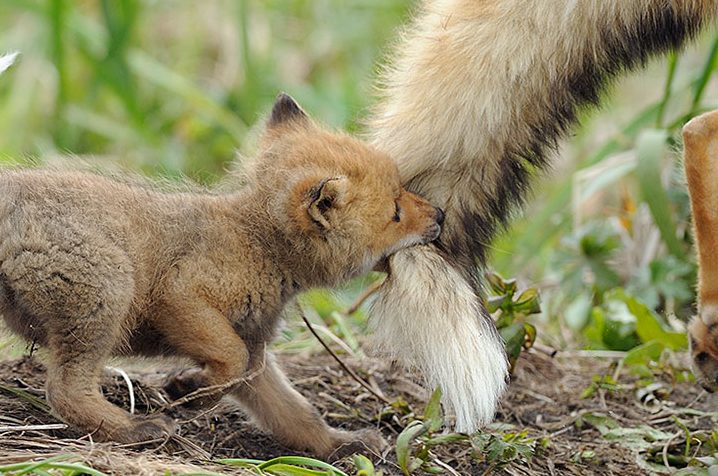
Have you ever looked at a baby person or a baby animal and thought “That is so cute I can’t stand it!” or even “That baby is so cute that I could just EAT. IT. UP.”? That sounds weird, but and it’s not true–we don’t really eat babies because they are cute. Sometimes, though, we do nibble (nom, nom, nom) on cute things, giving them little gummy bites. But we get “cuteness overload”–we love babies so much that our feelings get SO BIG that we have express them with little loving nibbles that show that we’re trustworthy and won’t hurt the baby and to help us manage our big feelings.

I know that Mary was very tired when she gave birth, especially because she had been walking all day. But I am also sure that when she and Joseph saw Jesus, they both felt the kind of love that people felt about you when you were born and that the people who love you still feel about you now.

Children were dismissed, and those who later found the nativity scene (which was a bit hidden in our sanctuary) were rewarded with a stone with Baby Jesus painted on it.

**Adults speaking about infants should be thoughtful about the children and other adults in their midst. While this sermon is positive about pregnancy and childbirth, it also recognizes that pregnancy is difficult and childbirth is tiring. Any additions should remember that 1/4 pregnancies in the US ends in a miscarriage or stillbirth; people in your congregation have suffered pregnancy loss. Others have struggled with both primary and secondary fertility challenges (that is, unable to achieve pregnancy ever or unable to achieve it after the birth of one or more children). Speakers should remember that not all people have the families they dreamed of–and that others experienced pregnancy, childbirth, and post-partem time as stressful or unpleasant. Finally, speakers should remember that many children will not have knowledge about their biological parents due to adoption, death, single-parenthood-by-choice, etc. Avoid comparisons between the Holy Family (two parents of different genders) and the families of children in the congregation.

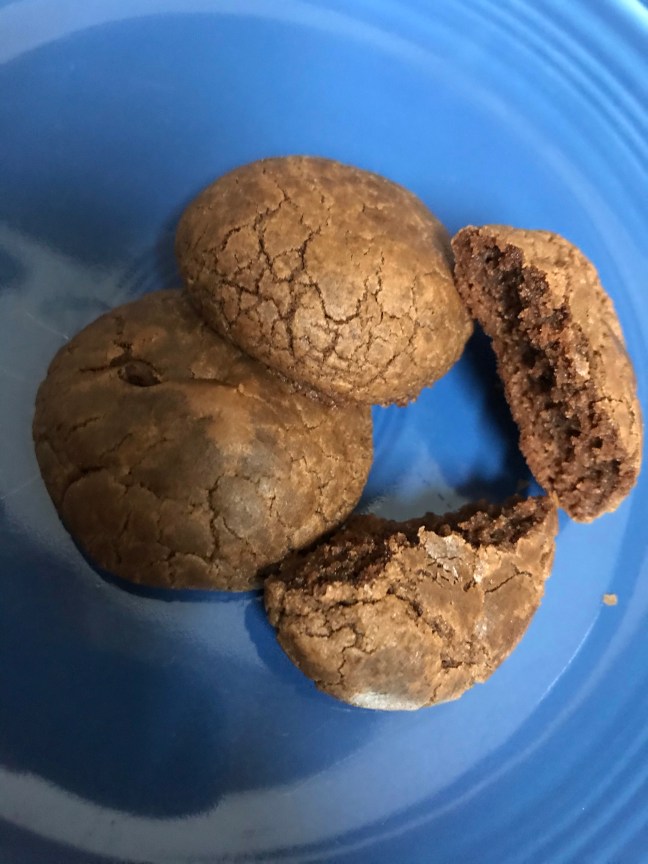
12 Days of Christmas Cookies: Hazelnut Chocolate Rounds

If standing in the pantry, eating the Nutella directly from the jar with a spoon depresses you, but you’re lazy, these are the cookies for you.

Ingredients

  • 1 egg
  • 1 c. Nutella
  • 3/4-1 c. flour

Directions

  1. Heat oven to 350. Prepare baking sheets by lining them with parchment paper or a silicone liner.
  2. Beat egg; add nutella and beat thoroughly.
  3. Add flour and beat until combined. I recommend adding 3/4 c., then adding 1 tablespoon at a time. Don’t allow dough to get crumbly, and do not overbeat.
  4. Shape into balls slightly smaller than walnuts in their shells.
  5. Bake 8-9 minutes. Allow to cool briefly before removing from a wire rack.


12 Days of Christmas Cookies: Red and Green Jell-O Cookies

This Christmas, we’re sharing 12 Christmas cookie recipes to help you prepare for your cookie parade (Guests bring a few dozen cookies they made, place them on the table, and then everyone takes a variety of them home, taking about as many cookies as they brought but of new kinds so that they can put together cookie platters for holiday parties and as gifts to teachers, mail carriers, sanitation workers, etc.).

I’ll be frank: these Jell-O cookies are more for fun than for eating, at least if you are a grown-up. They are what they sound like: cookies with a distinctly Jell-O taste to them. That makes them a lot of fun for kids to make and eat, so enlist the help of young ones to get full enjoyment from them.

img_3345

Ingredients:

  • 1 1/2 c. white sugar
  • 3/4 c. shortening
  • 2 eggs
  • 1 tsp. vanilla
  • 1 3-oz cherry Jell-O
  • 1 tsp. baking powder
  • 2 1/2 c. flour
  • 1/4 tsp. salt
  • additional white sugar for decorating, placed in a shallow bowl

Directions

  1. Heat over to 350 degrees.
  2. Cream sugar and shortening.
  3. Add eggs and vanilla. Mix well.
  4. Add Jell-O and mix again.
  5. Combine flour, baking powder, and salt and add to other ingredients. Mix until combined.
  6. Roll dough into small balls. Place on an ungreased cookie sheet. Flatten with the bottom of a glass that has been dipped in glass. If that’s a struggle, dip the top of each ball into sugar, then flatten with the glass.
  7. Bake 7-9 minutes. Cool briefly, then remove to a wire rack.

Repeat entire process with lime or green apple Jell-O.

12 Days of Christmas Cookies: Peppernuts

This Christmas, we’re sharing 12 Christmas cookie recipes to help you prepare for your cookie parade (also called a cookie swap or cookie party). Or, you know, just for eating yourself.

Peppernuts–or Pfeffernüsse, if you want to be technical about it–are a Danish/Dutch/German, but, most importantly, Mennonite (specifically of the Midwestern variety) cookie. They’re labor intensive (If you are working with a partner, you will finish them in A Muppet Christmas Carol; working alone, you’ll probably be able to watch both Home Alone and Home Alone 2: Lost in New York), so they are made by many Mennonites around Christmas. Thankfully, if stored in an airtight container, they last a long time.

There are a zillion recipes for peppernuts out there, but the basics are: some kind of sugar (molasses, white sugar, brown sugar, dark or light Karo syrup), which determine if they are “light” or “dark” peppernuts; a fat or combination of them; a mix of spices (Pepper is not required, despite the name. People have very strong feelings about the inclusion of anise.); possible fruits (dates, raisins, etc.) or ground nuts; and flour. You can see why one of my local church cookbooks includes 9 different recipes for this one cookie.

I’ve chosen a peppery, anise-forward version to share here because I like them spicy. The texture is like biscotti–quite hard and good for serving with tea.

Ingredients and Directions:
Cream together:

  • 2 c. light karo syrup
  • 1 1/2 c. shortening
  • 1/2 c. butter

Add

  • 3 tsp. finely ground black pepper
  • 3 tsp. nutmeg
  • 3 tsp. cinnamon
  • 2 tsp. cardamom
  • 2 tsp. ginger
  • 2 tsp. cloves

Plus:

  • 3 tsp. anise oil
  • 2 tsp. vanilla
  • 2 tsp lemon extract

Stir in

  • 2 c. sour cream

Add

  • enough flour to make a stiff dough (probably 5-6 cups)

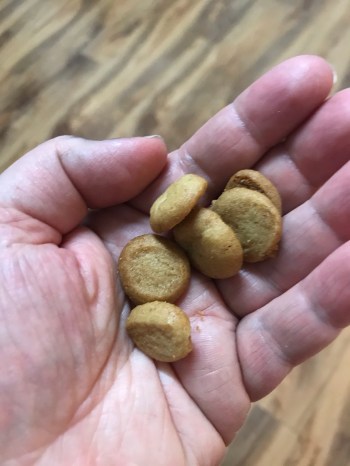
Roll into snakes about the circumference of a pencil. Slice, then either bake sliced or re-roll gently into balls. At this size, I fit 12 rows and 8 columns on a quarter-sized baking sheet. I made about almost 1600 total from this recipe.

Bake 8-10 minutes.img_3361.jpg

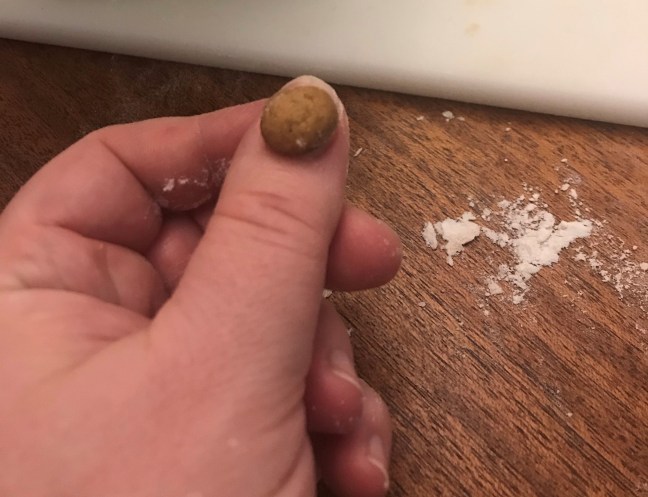
The ideal peppernut should look like it was cut out by a thimble. This one is as big as the fingernail on my pinkie–just perfect!

So many reminders of how loved we have been in November

November is almost no one’s favorite month–and the least favorite for lots of people. According to 2005 data from Gallup (the only time I found the question asked), November was ranked 11th, ahead of only February. And since Novembers have only gotten more stressful since 2005, with unpleasant elections and their aftermath taking up much of the month, it’s easy to imagine that many of us like it even less.

And there is a lot to dislike: shortened days and long nights, the start of the cold but rarely snow to make it worthwhile, the leaves are mostly fallen, the mums dead. The gemstone is the topaz, the ugliest.

On the other hand, a holiday devoted to cooking and eating, a daily reminder to go to sleep earlier, the start of Advent, and my birthday (which, now that you know about it, you should feel free to celebrate!)

Here’s what we’re loving about it

Our shelves are full of little things we love, especially photos of travels that now seem like a lifetime ago.

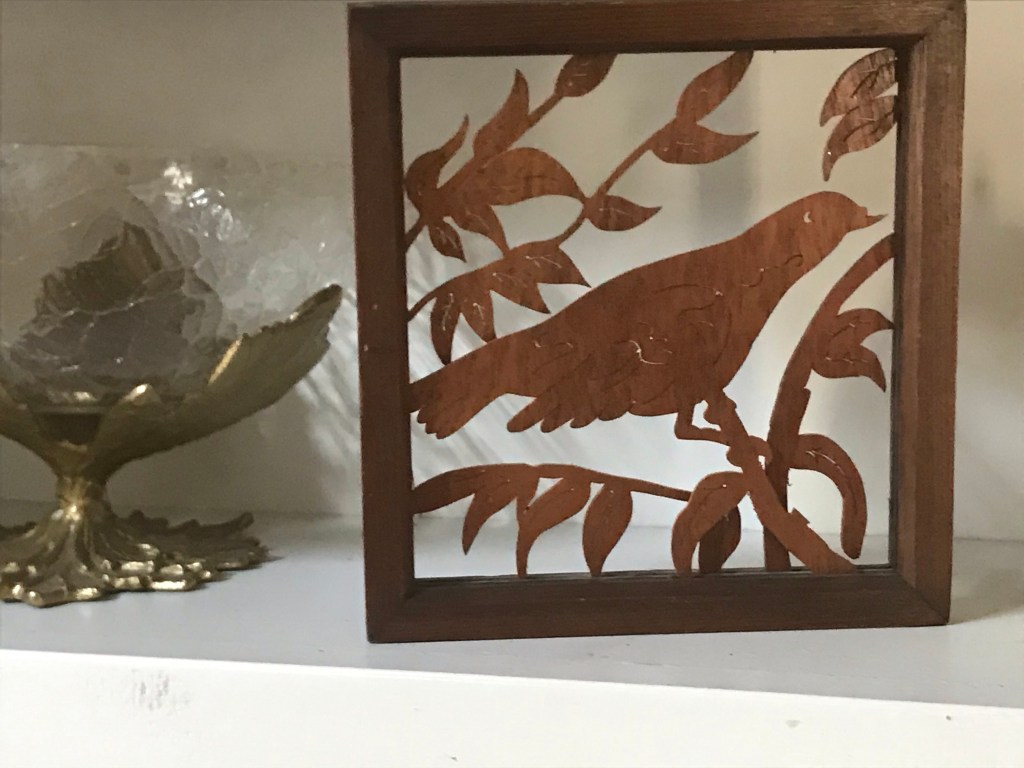
A wooden bird in a wooden frame
What a birthday! A much longed-for waffle iron, a new casserole dish, pajamas, and zero-proof cordials

Advent People: The Shepherds

This year, I’m sharing a bit about an Advent activity my church did last Advent during our time dedicated to children. Each Sunday of Advent, we introduced a few new characters to the Christmas story, each a porcelain figure about the size of a thimble. The figures were hidden in the church each week, moving closer and closer to the Bethlehem, the manger, and the star, and children were invited to search for them after church each week, sharing where they found them with other children so that everyone could find them. If they shared the location with the adult who led children’s time that Sunday, they received a small stone with one of that week’s figures painted on it as a prize, so that by the end of Advent, they had a Holy Family + Angel nativity scene.

The first week of Advent, we explained what the next few weeks would entail, and we reviewed it for just a few moments at the start or end of each of the following weeks’ children’s time so that new children would be included. Each week, the leader showed the children the new figures being added to the scene, then hid them during the bustle of children’s dismissal. The third week (December 13 in 2020), we focused on the shepherds.

Our children span from 2-12, and some are very familiar and some very unfamiliar with the Christmas story. Our speaker during Week 3 focused on shepherds as outsiders. She shared briefly about what shepherds did (watched flocks of sheep) and talked about why that was both a needed and a dirty job. She explained that they were considered untrustworthy by the rest of society–so much so that people were discouraged from doing any kind of business with them because they were thought to be cheaters and thieves. This made it hard for them to get the things they needed. We were left with the question: Why were some of the first people God wanted to share the good news of Jesus’ birth with shepherds, of all people? What does that tell us about how God values all people? How can we make sure that people our society might call “lowly” are are included and have their needs met? We ended by singing “Rise Up Shepherd and Follow” as a congregation.

Later, children who found the shepherd and sheep were rewarded with a stone of Joseph.

Alternatives for this week would be to focus on Joseph’s faithfulness to Mary during a time of uncertainty for him or the importance of trusting the people we love when they tell us about what God is doing in their life.

**Adults telling the story of the shepherds should consider the specific children in front of them. For example, in Kansas, where I live, some communities heavily invested in agriculture or meat packing, work often done by immigrants. Adults should speak sensitively about the nature of this kind of work and its social meaning if they fear local families being demeaned by talking about the low status of shepherds.

What are we thankful for?

Sometimes I get to share children’s time teachings with my congregation. When I do, I share them here. 

For this children’s time, from the Sunday before Thanksgiving, children shared parts of creation that they are thankful for. In the weeks before, they submitted drawings of landscapes, plants, and animals that they love. I used these to illustrate the first creation story in Genesis, viewing humans as dependent on nature rather than dominating it, an insight from Native American expressions of Christianity.

Advent People: Mary and Joseph

This year, I’m sharing a bit about an Advent activity my church did last Advent during our time dedicated to children. Each Sunday of Advent, we introduced a few new characters in the Christmas story, each a tiny porcelain figure.  The figures were hidden in the church each week, moving closer and closer to the Bethlehem, and children were invited to search for them after church each week, sharing where they found them with other children so that everyone could find them. If they shared the location with the adult who led children’s time that Sunday, they received a small stone with one of that week’s figures painted on it as a prize, so that by the end of Advent, they had a Holy Family + Angel nativity scene.

The first week of Advent, we explained what the next few weeks would entail, and we reviewed it for just a few moments at the start or end of each of the following weeks’ children’s time so that new children would be included. Each week, the leader showed the children the new figures being added to the scene, then hid them during the bustle of children’s dismissal. The second week (December 6 in 2020), we focused on Mary and Joseph’s trip to Bethlehem.

Our children span from 2-12, and some are very familiar and some very unfamiliar with the Christmas story.

Here is one way to focus the story:

Joseph was told by the angel that Mary would give birth to a son. Gabriel even told him that God already had the baby’s name picked out: Jesus, which means Salvation, and his nickname would be Immanuel: God with us. Joseph understand how important it was for him to support Mary, and take care of her during her pregnancy so that she could have a healthy pregnancy and baby.

But there was bad news: Mary was pregnant during a time when the king of the land demanded that all the people under his rule return to the city where their families were from so they could be counted. In the US, we do something like this every 10 years–we county every single person in something called a Census. But we don’t require that everyone return to the place where their families are from to get counted. But that is how the king did it then. So Mary and Joseph had to travel about 90 miles to get to Bethlehem. It probably took them a week to walk this far, and it would have been especially hard for Mary, because she was just about ready to give birth! The route wasn’t flat; it was uphill and downhill. And, at the time of year it occurred, the weather was mostly cold and rainy during the day and freezing at night. They had to walk by the Jordan forest, which had bears, lions, and wild boars in it. They may have faced robbers, and they would have traveled with others going to Bethlehem so that they were less likely to be attacked by robbers. They probably walked about 10 miles each day, about half the pace of other travelers who weren’t pregnant. And there were no fast food restaurants or convenience stores or highway rest stops along the way. It was hard work!

We an imagine what the trip was like. What do you think Mary and Joseph talked about? What do you think they laughed about? Do you think they felt worried, or do you think they felt confident? What promises had God made to each of them to assure them? What else might have been hard about the trip? What might they have done for each other to make it more pleasant?

Week 1, Gabriel and Mary had been hidden between the front door and the sanctuary; Week 2, these two were joined by Joseph, and they were hidden directly outside of the sanctuary. Children who found them were encouraged to tell other children who wanted help where they were located, and all children who reported where they were located received a small stone with a pregnant Mary (represented by the heart over her belly) on it. Children who had not participated the week before were also given an angel.

**Those leading story time should be sensitive to the experiences of children and adults i their audience. Children who have immigrated or those who have unstable family backgrounds (for example, homelessness) may find this story distressing, so you should teach to the children actually in front of you. This means, as much as you are able, knowing their stories and their needs.