15 Tips for a Lower-Stress Move

Since the Holmes-Rahe Life Stress Inventory was developed in 1967, Americans have consistently reported moving as one of their top stressors–and it is sometimes ranked as more stressful than marriage, breakups, and divorce. Of course, that probably depends on why, where, and when you’re moving; your financial situation; your physical health; etc. Still, even when you’re moving for all the best reasons, it’s stressful.

As a frequent mover (I’m doing it again this summer) and a friend to frequent movers, I’ve picked up some strategies along the way. I’m sharing a few of them here because some friends who haven’t moved in awhile are doing so this summer, and I’d like to share with them the things that have made my moves much easier. I’m presenting them in the order I recommend doing them.

Join social media groups in your new hometown. If there is a Facebook group where locals share recommendations for home repair services, house cleaning services, plumbers, carpenters, etc., join now. This will let you start building some knowledge of who to call if you need help on your first day.

Hire a housecleaner. Before you arrive in your new place, have it professionally deep cleaned. Yes, the previous owner should have done it. But they were likely in a hurry and, since they weren’t going to live with the consequences of a bad job, they probably did not do it to your standard, and you want to start your time in your new place with feelings of gratitude, not fury or doubt about whether the previous occupants took good care of the place. Plus, you want to focus on unpacking, not cleaning, and you absolutely don’t want to unpack your stuff into greasy cabinets or dusty drawers. If you already have a housekeeping service you like, ask if they will clean your new place, even if it is out of their service area–for an extra fee, of course. If you don’t have a current housecleaner, hire one now to clean a small part of your current house–a deep clean of the bathroom or kitchen is a good place to start. This lets you test out a service before committing to a pricey whole-house cleaning. (And this is why this advice comes first in my list–because you might need to test out a few cleaning services before you find a great one.) If you are moving at a distance, start asking friends or future colleagues for recommendations. Get specific about what you want: every nook and cranny, every drawer and shelf, the inmost depths of every closet and cabinet. A solo cleaner may need 2-3 days to accomplish this, depending on the size of your house.

Collect liquor store boxes. Provided that a liquor store is a safe and legal place for you to be, ask if yours gives away free boxes. Lots do, and they may even store them in a specific spot with a dolly you can borrow to haul them to your car. Pop in regularly, ideally right after opening, to pick up lots and lots.

Liquor boxes are small enough that they can be carried by even those of us with smaller wingspans, and they are also small enough that you can’t easily overfill them, making them too heavy to lift. Even when filled with books or Fiestaware, they’re manageable. Avoid beer boxes, which typically have a whole in the bottom as the four flaps don’t perfectly overlap. Wine and liquor boxes work well, and they may even have dividers in them that are perfect for packing glasses. Always choose sturdy ones, and, if you have an option, pick light-colored boxes without too much advertising on them so that you have plenty of places to label them.

If you will hire professional movers, reserve their services now and learn their packing policies. Some may request that you list every item in a box, and that’s easier to do from the start.

Get everything in the room where it belongs. First step of packing: know what you have. Your goal is to avoid “miscellaneous” boxes that will have you walking from room to room at your new place as you unpack them. And it stinks to have packed up your winter sweaters and carefully labeled them, only to find one more at the bottom of the laundry hamper.

To achieve this goal, take an empty box or tote bag or laundry basket and label it (even if just mentally) with the name of one room. Then walk into every other room of the house and pick up anything in them that belongs in the first room. For example, you can take a laundry basket that is dedicated to the kitchen and walk every other room of the house looking for dishes, dish towels, or food (or whatever else might have left the kitchen but really belongs there).

Declutter. How rich we are, that we have to have a plan to have less! Instead of seeing decluttering as a painful or shameful task, view it as an exercise in gratitude to those who make products and those who have given them to you and an act of connection to those who will care for them now that you have benefitted from them. Here are some tips to make it easier to tap into appreciation for your material possessions.

Put everything you own away. As you move through the decluttering process, you’ll be winnowing your stuff down to what is beautiful, meaningful, or useful (and hopefully at least two of these three!). Make sure it is clean, then put it where it belongs in your current home. Use the effort of putting it away as another opportunity to review if you really want to carry it with you to your next home. As you hold it in your hand, ask yourself, If I didn’t own this, would I wish that I had it? If not, it may be a good candidate for gifting, donating, or selling.

Pack items of a kind, starting with what you don’t need now, in boxes that will end up in the same room in your new home. Your goal is to end up with no boxes labeled miscellaneous. So, pack items that are alike and will end up in the same room in your new home, even if they don’t come out of the same rooms in your current home. For example, perhaps your children now share a bedroom but will have separate bedrooms in your new home. Pack now according to which bedroom the box will go into, not which one it came out of. The narrower the range of items inside the box, the better. For example, pack your sweaters in one box, your dressier dresses in another. Label narrowly so that you can prioritize your unpacking to find what you need quickly. You don’t want to waste time unpacking a food dehydrator when what you need is the coffee pot just because you labeled them both only as “kitchen.”

Start your packing with the things you are least likely to need now: out-of-season clothing, athletic gear, holiday decorations, home repair tools, school supplies, or items that belong to people who aren’t currently living with you (like a college student or parent who lives with you part-time).

Inventory what you own. I mean this literally–and especially if you are doing a move that will require your possessions to be out of your sight, like on the road with a moving company, in a storage unit, or in a moving truck that you yourself are driving a long distance (since you’ll have to stop to eat, use the restroom, and maybe sleep). Thieves target moving vans in hotel parking lots, auto collisions happen, and storage units flood. Check your homeowner’s insurance to make sure it covers damage, destruction, or theft of property mid-move, and help yourself now by keeping a long list of items you are packing.

Label your boxes. Label the box with the name of the room and the items inside. For example, don’t just write “books,” because that will require you (or, even worse, someone helping you move) to decide where books go. Is it a library? Home office? Den? Children’s bedroom? Write the name of the room where you want the item to go AND include a word that will help you figure out what’s inside without opening it. “Office: Textbooks” or “Sarah’s bedroom: Books” will help those carrying the box know where to place it and also how to handle it–like whether it will be heavy or if they should avoid putting other boxes on top of it. Plus, this labeling makes it easier to find what you need fast upon arrival.

I also recommend tagging boxes with a colorful sticker that corresponds to a room in your new home. (The neon circles used to tag items for yard sales work well, provided you can get them in lots of colors.) This can help you see from a distance which boxes will go to which rooms, which is especially useful if you are loading a dolly with boxes that go to the same place.

Pro-tip: your keywords on every side of each box, plus on the top. When a box is loaded into a moving truck, you’ll typically only be able to see one side of it. If you write the new home for the box on only one side, 75% of the time, you won’t be able to see it without picking it up and searching for it (and if you write it on the top, you’ll never be able to see it unless you stand over it, which you can’t do if it’s underneath other boxes). Use a black Sharpie on light colored boxes and, if you’re using liquor boxes with dark sides, use a white, silver, or gold Sharpie (store cap-side down for best results).

Sort your packed items according to the room where they will go in your new home. When you bag your groceries at the grocery store, you bag them according to where they will go in your house: all bathroom items together, all items for the pantry or the refrigerator. That way, when you unload groceries, you can look inside the bag, see a single item and instantly know where to take and unload the whole bag, and you don’t have to take every bag to the basement freezer–only the ones that are filled with only items for that destination.

Apply the same concept here: Once you pack your boxes and label them, store them according to what room they will go into. For example, if you currently have books throughout your home but will soon be consolidating them into a single library, place all the boxes of books together now–in an empty closet, corner of the garage, etc. This way, when they are placed in the moving truck, they will be placed near each other and then can be unpacked all at once. On move-in day, you can unload the truck one room at a time. If friends or family are helping unpack, someone can work in a single room, and within a few hours, you can have the whole library or kitchen set up. And if you are moving yourself in your car over a few days, you can load all the items for one room, transport them at once, and unload them at once, checking off each room as you complete it.

Hire loaders and unloaders, even if you drive the moving truck yourself. If you are a friend of mine, your friends are likely too old to help you lift every single thing you own in exchange for pizza. If you are moving a great distance, you might rely on a moving service, but even if you are driving all your stuff yourself, having someone else schlepp boxes to and from the moving truck is a huge help. You’ll have to do the unboxing and putting away yourself–don’t start that process with back pain from hauling it, too. Professional movers know how to avoid injury and have better equipment than you can rent to get the job done.

That said, expect even professional movers to do a bad job. (Sorry, but I’ve never seen a case where they didn’t break something.) If you own an item that is especially heavy and tricky–a piano, for example–hire someone with specialized knowledge. If anything is delicate and precious to you, carry it with you or ask a friend to drive it separately: musical instruments; artwork; electronics; jewelry; sensitive files; your fireproof envelope with your birth certificate, social security card, passport, etc. If you are transporting firearms over a long distance, hire a company that specializes in that kind of service as you don’t want to leave them in a moving truck or even your own car.

Pack an overnight bag and carry it with you. Don’t wait until 11 pm, after you have spent the day loading and unloading a moving truck, to figure out that you don’t have what you need to go to sleep. Pack an overnight bag with your toothbrush, toothpaste, and floss; face wash and soap; washcloth and towel; shampoo and conditioner; meds; pajamas; eye mask (since you don’t know what the light is going to be like in your new bedroom); a change of clothes; and your pillow (if you are a fussy person like me). If moving a distance with a family over the road, pack a single carry-on for the family for each night on the road; that way, you don’t have to unload one suitcase per person into the hotel each night but can instead just bring in one suitcase per night. In the Night #1 suitcase, pack a laundry bag for collecting dirty laundry.

If moving a long distance by car, rent an AirBnB or VRBO in a remote location or with a garage that locks. Do not park your moving truck in the parking lot of a motel. If you must stay in a city without the ability to secure your car or moving truck, rent a storage unit (yes, it’s worth it to pay a month’s rent for one night if it means you aren’t robbed) in the city, park it inside the unit, lock it (You may need to bring your own lock), and then get an Uber back to your hotel.

Hire an awesome cleaning service to clean after you leave. Be a Boy Scout and leave your current home nicer than you found it. Can you get away with not doing a deep clean? Sure, but don’t be like that, especially if the next occupants are likely to be people without the money to hire help with their own move.


Quick Decluttering Tips

Decluttering is so, so weird. Like, we have more than we need? How seldom has that happened in human history!

This post is part of a little series on moving (which we’re doing again this summer), but it’s applicable any time you want to pare down. Decluttering is an exercise in gratitude, as we think of those people who created the things we have in our lives. It is an exercise in responsibility, as we choose what we will care for. It’s an exercise in appreciation, as we recognize how these items have improved our lives. It’s a way to build connection, as we pass those things along to someone who will benefit from them. Yes, a little more space in our closet or garage also feels good, but the process can also be joyful, as we think of those who have shared with us and those we get to share with.

Choosing how to start: If you are overwhelmed, start in the room where you spend the most time, which is probably the room where you are least likely to store stuff you aren’t using. If your home isn’t too large or too cluttered, you could start with a task (trash in every room, then recycling in every room, then gifting in every room, etc.).

First up: trash and recycling. In any room, start by throwing away what is obviously trash. Trash are non-recyclable things that are single-use items that have been used; stained items; and broken items that you don’t know how to repair or don’t have time to repair and that would not be enjoyed by someone you know who does have the time and skill to repair them. A good clue to recognizing something as trash is if it has been broken for a long time and you haven’t bothered to figure out how to fix it or found someone who knows how.

Upcycling: If something broken could be upcycled into something useful or beautiful and you know the person who would be a good fit to do this work, text them a photo and ask if they are interested. If you think you are the person to do this work, ask yourself: Is it within the next 10 projects I want to do? If not, trash or recycle it. If moving, change that number to 3, not 10.

Recycling is very similar, except it’s stuff that can be turned into something else if you direct it the right place. Hopefully, you already recycle basic plastics, glass, and aluminum cans. Now is the time to look at other things you can recycle: metals can go to a local scrap yard, your local thrift store may take textiles (but check first before you donate stained or ripped garments), and half-used cans of paint and stain can often be donated to your local dump, which then offers them to customers searching for just a small amount of paint or stain.

Now, everything that remains is beautiful, meaningful, or useful to the present-day you. But think about yourself in a few weeks or months. How will you be different than you are now? Maybe you are moving to a smaller home now that your children are out of the house. Maybe you are moving to a new climate. Maybe you are changing jobs in a way that requires major wardrobe changes. Keep the things that the current you finds meaningful and beautiful, but if the near-future you will not find these things useful, consider saying goodbye to them.

You deserve to have a home filled only with things that are beautiful, meaningful, and useful to present day you, not to the person you once were. If something doesn’t can’t be described with at least one of those adjectives, get rid of it. And, in the future, avoid bringing things into your home unless they can be described by two of them.

Next: gifts. What could be someone else’s treasure but you won’t need or enjoy in your next home. Would a specific person–someone you can name–benefit from it? If they are regularly part of your life, put their name on it with a sticky note and set on the kitchen table. If they live at a distance, answer this question honestly: Is the value it will add to their life worth the cost to you of mailing it? If so, put it on the table with their name on it. At the end of the decluttering session, drop them off at the person’s house or at the post office.

Then: donate and give away. Would someone else, but you aren’t sure who, benefit from an item? Set it aside to donate. Remember: only donate or give away things that are in a condition that is good enough that you’d pay money for it yourself.

Some places you can donate: your local nonprofit thrift store, Project G.L.A.M. (for formalwear dresses and accessories), free little libraries, free neighborhood pantries, and the Humane Society (for pet supplies as well as old towels).

Also, check out your community’s Freecycle or similar no-cost social media pages.

And don’t ignore the storefront in your own front yard: stuff on the curb with a “free” sign on them. Don’t put them out before the trash truck arrives, and don’t leave them out overnight. Double check local rules about leaving things curbside so you don’t get a citation.

If you have a bulky item that you can’t easily cart to a donation site, advertise it for free online but require it to be picked up. Specify measurements and the tools needed to dismantle or carry it–like a dolly or a set of allen wrenches. This is good way to dispose of mattresses, bunk beds, recliners, pianos, and other large items. If someone offers to pay you, ask them instead to run an errand for you, like dropping off your other donations to the local thrift store or the Humane Society.

Sell: My rule is: if selling something would bring me less than $10, I give it away–and when I’m moving, that price goes up to $20. And I only sell it online, like on Facebook Marketplace, and locally, so I don’t have to ship an item.

Unless you already have a yard sale planned, moving is not the time to add one to your life. (The summer before moving, if you have a whole lotta stuff, could work, but do it with friends so it’s at least fun.) And that’s not just because of the hassle but because of the emotional aspect of it: It’s can be very hard to see other people assessing the value of your things, then offering you a quarter for something you have a lot of happy memories associated with. Sell high-value items online instead and donate the lower-value things.

If you are really committed to selling instead of donating a lot of small things, ask someone who is already hosting a yard sale if you can simply set up a table at their sale and let them handle the sale of items in exchange for a portion of the profits, or offer to haul off any leftovers to the thrift store or dump in exchange for not having to sit outside all day in the heat haggling with strangers over prices. Alternatively, if you have just a few items, ask if you can simply add them to their sale and allow them to keep all the profits. Do you really need the $20 you’d earn from selling a few purses or a nightstand? Probably not.

Tips to avoid having to declutter: Two items out for every one in. Share tools, specialty baking pans, and other items you rarely use with neighbors or friends. Commit to donating something every time you leave the house on an errand. (We donate something almost every day to our neighborhood pantry.) Transition to a capsule wardrobe, so that every thing in your closet matches everything else. Switch all bills to paperless and put on autopay. Remove horizontal spaces where paper piles up. Don’t check the mail unless you are ready to deal with it (but deal with it at least once a week). Sort the mail as you walk into the house; recycle newspaper inserts and junk mail, and immediately respond to all other mail; immediately return to the mailbox for pickup the next day.

Bonus tip: Throw out trash from your car every time you are pumping gas.

4 Short Advent Reflections

Our church invites people to submit reflections/activities/encouraging words to be shared via email during Advent. Each of us wrote one, and I think you can hear our voices very clearly in them.
 
From me:
 
Mary Elizabeth Coleridge was a British novelist and essayist who wrote in the late 19th and early 20th century, but she is best remembered now for her poetry. Her work often has a mystical element to it, like in this simple, short poem about Christmas with a shocking last line that reminds me of the Magnificat’s promise:
 
“I Saw a Stable”
 
I saw a stable, low and very bare,
A little child in a manger.
The oxen knew Him, had Him in their care,
To men He was a stranger.
The safety of the world was lying there,
And the world’s danger.

Much of Coleridge’s poetry has been set to music, including this poem. You can listen to it here:

From the youngest:
I like a sketch comedy show called Studio C. It’s a good fit for kids but my whole family likes it. They made a Christmas Compilation. It’s an hour long, but you can watch just one skit when you need a little laugh.

From the middle child:

Ever since I was little, my favorite holiday has been Christmas. I’m simply enamored by the sparkling lights and the excitement in the atmosphere. But I struggle with the arrival of the holiday. For me, the buildup is almost better than the actual day! Because when the day comes, I’m struck by the fact that I must wait another year for the excitement and cheer of waiting. The gifts are not my favorite part. It’s the sense of togetherness I gain from being excited for something with other people! I guess that makes Advent my favorite time of year, even more than Christmas!

And from the oldest:

A favorite part of this holiday, for me, is its fascinating cultural history. From its early beginnings as a way to absorb and de-paganize solstice festivals to Charles Dickens nearly single-handedly bringing it back into vogue, Christmas has had its ups and downs.

To me, the most humorous part of Christmas’s long history is Oliver Cromwell’s–Lord Protector, commander of the New Model Army, and all around most puritan of Puritans–War on Christmas. Now, it technically is a little facetious to say that Oliver Cromwell banned Christmas. What actually happened was that the extremely Protestant Roundhead faction (and I mean Protestant in the “Witchfinder General”/“Popish plot” kind of way) beat the monarchists in the English Civil War. Suddenly, real, classic Puritanism in its most fun-hating form takes control of the country, and Cromwell, their leader, appoints himself dictator and begins a war with Ireland that basically amounts to an attempted genocide, executes the king, and crushes a Scottish rebellion, but more important for our story, he implements a series of extremely harsh restrictions on celebrations and veneration of saints. Basically, he sees the myriad celebrations and feasting held in honor of saints, the largest among them being Christmas, and he, because most of England was seeing Catholics in the shadows and Frenchmen in the walls, declared the holiday to be “pagan” and “popish.” He banned reverie and celebration, passing an ordinance that people should treat December generally and Christmas in particular “with the more solemn humiliation because it may call to remembrance our sins, and the sins of our forefathers, who have turned this feast, pretending the memory of Christ, into an extreme forgetfulness of him, by giving liberty to carnal and sensual delights.” (You do celebrate Christmas this way, right?) This deeply angered the public, triggering a weeks-long period of pro-Christmas rioting/general merriment that Cromwell was unable to control. Eventually, Cromwell would go on to die, have his body be dug up, hanged at Tyburn, and then beheaded, his decapitated head eventually stuck on a stake in front of Westminster Hall, a harsh punishment even for this true enemy of Christmas.

All in all, an anecdote in the history that reminds us that this wondrous season hasn’t always been Coke polar bears and mall Santas. It combines a few of my favorite historical topics: weird Puritans, anti-governmental rioting, and of course, Christmas!

Oliver Cromwell's Head • History in Numbers

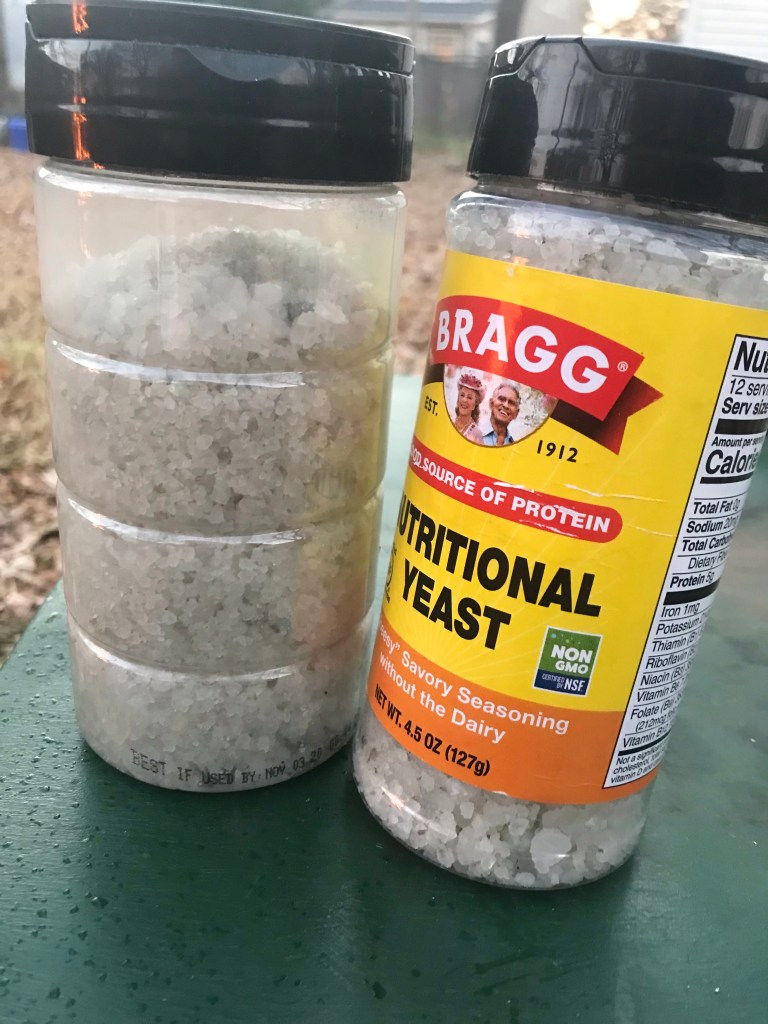
How to prevent falls with a Parmesan cheese container

This year, we’ve been saving our cylindrical, lidded containers, like the kind nutritional yeast, seasoning salt, or grated Parmesan cheese comes in to build ice-melt shakers.

Falls on ice and snow are a major cause of injury in the winter—which means hospital visits, hospital bills, and, often, physical therapy. You already walk like a penguin, but you can decrease the chance of a fall by keeping a shaker full of pet-friendly ice melt or salt/sand or salt/kitty litter (non-clay based so it doesn’t melt into a goopy mess) mix in a cup holder in your car.

When you swing your door open, take a moment to look to see if you’re about to step into a slick patch. (I drive a minivan and so keep one in a cup holder by each door so the kids can step out safely too.) If you have a long haul across a parking lot or if you expect ice to arrive while you’re inside, take it with you to make your trip back to your care safer.

Once you’ve made an ice melt shaker for yourself, use the next canister you empty to build one for your neighborhood sharing box or free little pantry. This is an easy way to take care of your neighbors.

100 gifts that are (almost) always a hit with kids

I’m not a recreational shopper typically, but I enjoy choosing gifts from my loved ones that they will enjoy. It’s a chance to think about them more deeply and a reminder to pay attention to what brings them pleasure. For kids, especially if you live far from them, this can be hard. Here is my go-to list for fun presents to send to kids. Of course, it’s best if you select what the children in your life have shown you that they love, and you should know that the adults who spend time with them will appreciate it too; no one wants to give a gift that will feel like a burden. Here are our ideas, and we’d love to hear yours!

  1. construction paper
  2. scissors with funky edges 
  3. glue sticks of different colors
  4. scented crayons or markers
  5. high-end colored pencils
  6. art pencils and a high quality eraser
  7. gel pens or Sharpies
  8. an art easel
  9. sketch books of various sizes
  10. a satchel for carrying art supplies
  11. cannisters for art supplies
  12. an electric pencil sharpener
  13. a high quality journal
  14. a journal with a lock and key
  15. a coin counting piggy bank
  16. a ceramic bank of a favorite animal
  17. a small safe
  18. a lockbox with a key
  19. a fireproof envelope for special documents
  20. a photo album with pictures of them
  21. a time capsule for them to make
  22. a time capsule with things about them inside
  23. fuzzy socks
  24. funny socks
  25. new mittens with clips to hang them on their coat
  26. gloves that can work with a touch screen
  27. long johns or footie pajamas
  28. a body pillow or a boyfriend pillow
  29. a bean bag chair 
  30. a book lamp
  31. a handcrank flashlight
  32. a handcrank radio
  33. a water bottle, mug, thermos, or travel mug
  34. fruit leather
  35. dehydrated strawberries or raspberries
  36. kumquats
  37. cheddar cheese or caramel popcorn
  38. snack food from another country
  39. movie theater sized boxes of candy
  40. walkie talkies
  41. a tent
  42. a hammock
  43. a canteen
  44. a sleeping bag
  45. a humidifier that uses essential oils, plus some oils
  46. nail polish
  47. Working Hands hand cream
  48. mud masks
  49. lip gloss
  50. lip balm
  51. shaving supplies
  52. a roll of quarters to use in vending machines
  53. a monogrammed apron 
  54. a kid-sized suitcase
  55. a wallet
  56. a purse
  57. a magazine subscription
  58. fancy stationary
  59. post card stamps
  60. hard-to-find candies or sodas
  61. vegan beef jerky
  62. an age-appropriate cookbook
  63. an address book filled out with addresses you know they will want
  64. a perpetual calendar where they can write birthdays of friends
  65. a pop socket
  66. a magnetic phone mount (for those old enough to drive)
  67. a power bank
  68. a very fancy bookmark
  69. Stretch Armstrong and his dog Fetch Armstrong
  70. the book that won this year’s Caldecott, Newberry, Coretta Scott King, Batchelder (for foreign language book translated into English), Geisel Medal, Belpre Medal, Odyssey, Hornbook, Ezra Jack Keats, Charlotte Zolotow, or Hornbook awards
  71. a pop-up tunnel for use inside
  72. a swing
  73. a “flexible flyer” style sled
  74. a red runner sled
  75. a toboggan 
  76. a snow tube sled
  77. a record player with records
  78. the board game that won this year’s Game of the Year
  79. retro games for their current game system
  80. Rubik’s cube
  81. Dutch Blitz
  82. Parcheesi or another classic game they don’t have
  83. Uno or, if they already have it, Skip Bo or Duo
  84. a small electric blanket
  85. a water bottle or rice bag that you heat and put in your bed
  86. new sheets with their favorite characters on them
  87. a houseplant
  88. a birdhouse, bird feeder with food or a suet feeder, or bird bath
  89. a bat house
  90. a new soccer or basketball with air pump, if they don’t already have one
  91. a yoga ball or a yoga mat
  92. a fun night light
  93. an alarm clock
  94. a new percussion instrument, like jingle bells or claves or a woodblock or hand drums
  95. unusual teas and a tea strainer
  96. spice mixes for popcorn
  97. a pocketknife, Swiss army knife, or leatherman
  98. a microscope
  99. a telescope
  100. binoculars
Above, our tree on the night before Christmas, 2020.